

TL;DR:
- A professional actor headshot is a vital marketing tool that communicates your type, personality, and readiness. It must meet industry standards for format, quality, and authenticity to maximize casting opportunities. Regular updates and strategic choices in style significantly enhance your visibility and credibility in acting auditions.
Your headshot is the first thing a casting director sees before you walk into the room, and in many cases, it determines whether you get that chance at all. Understanding what is an actor headshot, why it matters, and how to get one right is not optional for serious performers. It is the foundation of your entire casting presence. This guide covers the actor headshot definition in full, from purpose and format to types and practical preparation, so you know exactly what you are working with and what the industry expects.
Table of Contents
- Key takeaways
- What is an actor headshot?
- Technical standards and specifications
- Types of actor headshots and which to choose
- Practical tips for taking and maintaining your headshot
- My honest take on why headshots changed everything
- Get your actor headshots right with Eric Campbell Photography
- FAQ
Key takeaways
| Point | Details |
|---|---|
| A headshot is your calling card | It is a professional close-up that communicates your type, personality, and readiness for the industry. |
| Technical specs matter | Print headshots are 8×10 inches at 300 DPI; digital submissions require specific pixel dimensions and file sizes. |
| Multiple headshot types exist | Commercial, theatrical, and traditional styles each serve different casting purposes and should be chosen deliberately. |
| Authenticity beats polish | Casting directors want headshots that look like you today, not a filtered or idealized version. |
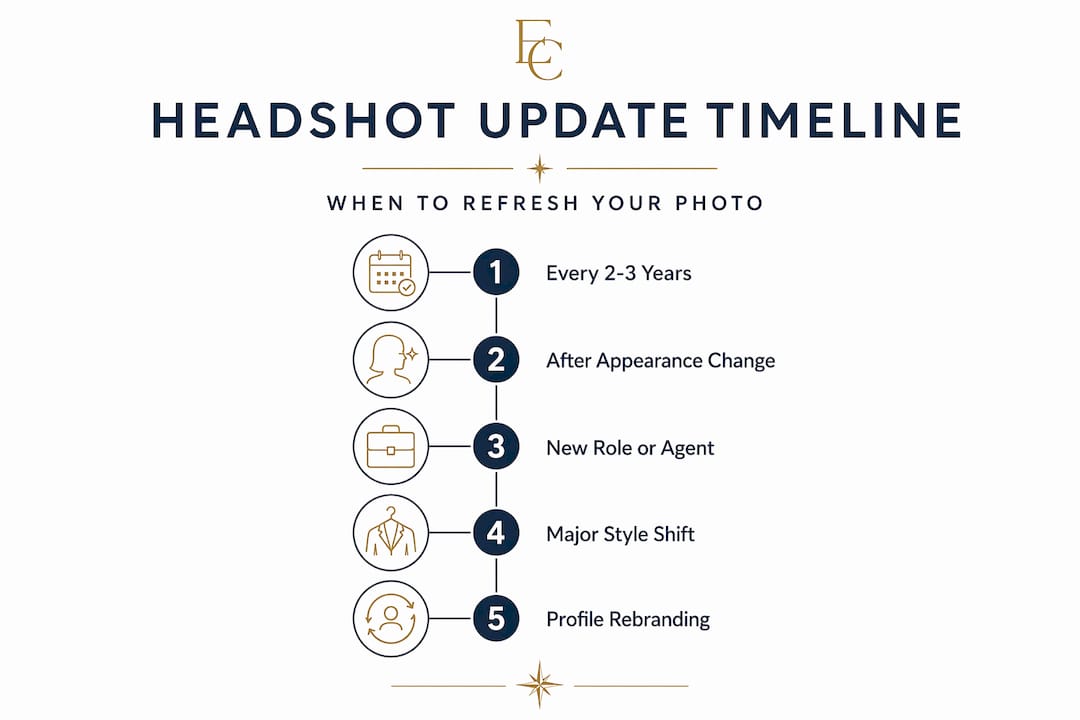
| Update regularly | Refreshing your headshots every 2 to 3 years, or after major appearance changes, keeps your submissions competitive. |
What is an actor headshot?
An actor headshot is a professional photograph, typically framed from the top of the head to just below the shoulders, designed to represent you to casting directors, agents, and producers. That sounds simple enough. But where most actors go wrong is treating it like any other photo. It is not a portrait taken at a family event. It is not a filtered selfie from your phone. It is a deliberate marketing tool built around one goal: communicating who you are as a performer in a single frame.
What makes a headshot work is clear focus on the face, an authentic expression that reflects the roles you want, and zero visual distractions pulling the eye away from you. The background stays simple. The lighting flatters without hiding. The framing puts your eyes front and center because that is where connection happens.
Here is what a strong actor headshot does for your career:
- It tells casting directors your “type” before you say a word
- It signals that you take your career seriously and operate professionally
- It gives agents something to submit on your behalf with confidence
- It creates a consistent visual identity across platforms like Actors Access and Casting Networks
- It opens the door to auditions you would otherwise never be considered for
“Your headshot is not a photo of you. It is a photo of the version of you that casting directors are looking for.” This framing matters because it shifts the focus from vanity to strategy. The best actor headshots do not show you at your most glamorous. They show you at your most castable.
A professional headshot represents your brand and signals your seriousness about your craft. That is the actor headshot definition in real terms. Not a pretty picture. A business asset.
Technical standards and specifications
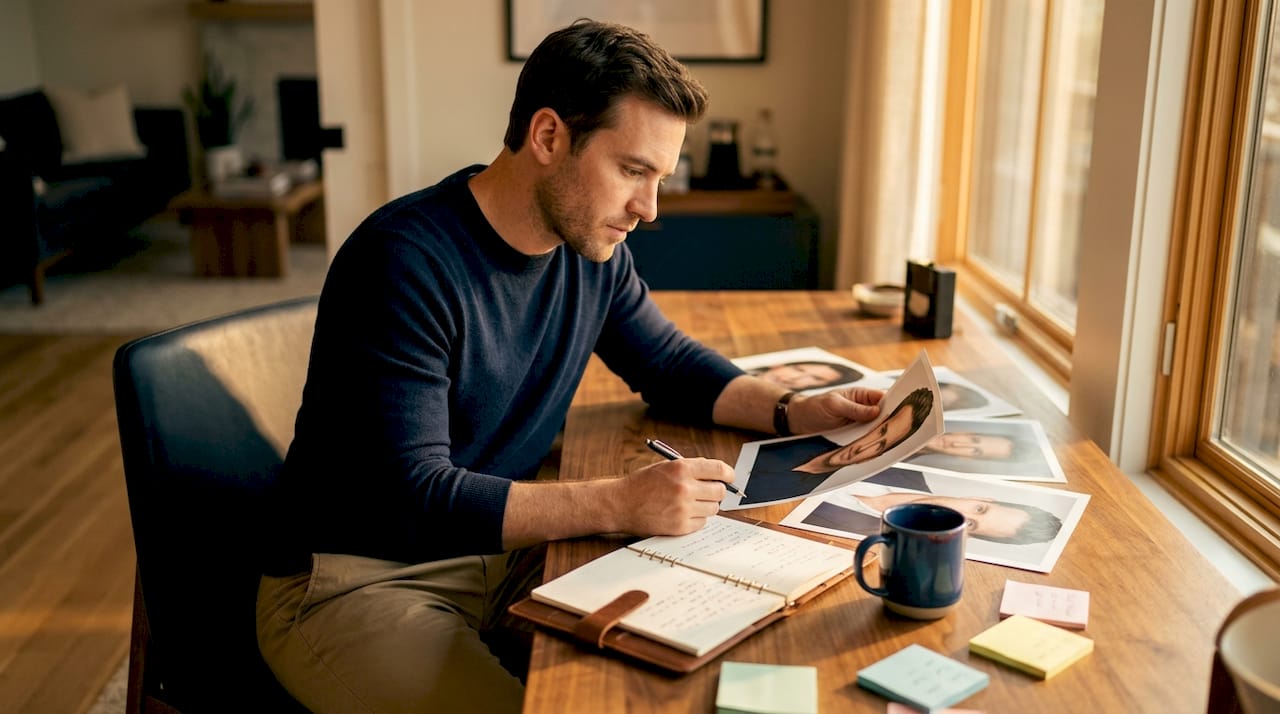
The industry has real requirements here, and getting them wrong means your image may not display correctly on casting platforms or print at a usable size. Knowing the specs is part of knowing how to take a headshot that actually functions in professional submissions.
For print, the standard has not changed in decades. Headshots are 8×10 inches at 300 DPI with a 4:5 aspect ratio. Digital is more nuanced. Casting Networks requires JPEG files in sRGB color profile at 1200×1600 to 2000×2500 pixels, with file sizes between 300KB and 2MB. Actors Access recommends dimensions of 1500×2000 with a maximum file size of 1MB.
Here is a side-by-side look at the specs that matter most:
| Format | Dimensions | Resolution | File Type | File Size |
|---|---|---|---|---|
| 8×10 inches | 300 DPI | TIFF or high-res JPEG | 5MB+ | |
| Digital (Casting Networks) | 1200×1600 to 2000×2500 px | 72 DPI screen | JPEG (sRGB) | 300KB to 2MB |
| Digital (Actors Access) | 1500×2000 px recommended | 72 DPI screen | JPEG (sRGB) | Max 1MB |
One thing that trips actors up is the color profile. Printing labs and casting platforms both want sRGB, not Adobe RGB. If your photographer delivers files in Adobe RGB and you do not convert them, the colors will look dull or off when uploaded. Always ask your photographer to deliver final files in sRGB.
Pro Tip: Ask your photographer for both a high-resolution print file and a web-optimized version after your session. That way you are ready for any submission format without needing to resize or re-edit later.
On the subject of timing, updating your headshots every 2 to 3 years, or sooner if your appearance changes significantly, keeps your profile competitive. Profiles with recent, high-quality photos receive over 50% more attention from casting professionals. That number alone should make updating a priority, not an afterthought.
Types of actor headshots and which to choose
Not all actor headshots serve the same purpose. The best headshot for actors is the one that matches the type of work they are pursuing, and most working actors maintain more than one style in their portfolio. Different headshot types are designed for different casting contexts, and using the wrong one for a submission can quietly cost you opportunities.
Here is how the main categories break down:
| Headshot Type | Key Characteristics | Best For |
|---|---|---|
| Traditional | Neutral expression, clean background, minimal styling | Drama, prestige TV, film submissions |
| Commercial | Warm, open smile, approachable energy | Commercials, brand campaigns, family roles |
| Theatrical | Intense or emotionally charged expression | Stage work, serious film, character roles |
| Comedic | Light, playful energy without forcing a grin | Sitcoms, sketch comedy, improv casting |
| Modeling crossover | Strong bone structure focus, editorial styling | Agency submissions, print modeling |
Choosing the right type starts with your casting goals. If you are pursuing commercial work and submitting a theatrical headshot with a brooding expression, you are sending the wrong message. Casting directors make decisions in seconds, and a mismatched headshot creates friction in that split-second judgment.
A few things to consider when selecting your headshot style:
- What roles are you most frequently called in for? Lead with that type.
- What projects are you actively submitting for in the next six months?
- Do you have representation? Your agent may have specific preferences for what performs best on your castable types.
- Are you building a portfolio from scratch or refreshing an existing one?
Most actors starting out should prioritize a clean commercial headshot and one theatrical option. As your career grows and your range expands, adding more types gives you flexibility. Think of it as building a wardrobe for your career, one piece at a time.
Practical tips for taking and maintaining your headshot
Knowing the actor headshot definition is one thing. Walking into a session and getting photos that actually work is another. Here is how to prepare so your time and investment pay off.
Choose the right photographer. Not every skilled photographer understands actor headshot requirements. Look for someone with a portfolio of actor work, not just corporate headshots. The difference in how they direct expressions and energy is significant.
Plan your wardrobe with intention. Stick to solid colors that complement your skin tone. Avoid busy patterns, logos, and anything trendy that will look dated in two years. Bring multiple options to the session. The goal is for the clothing to support your face, not compete with it.
Practice expressions before you arrive. Stand in front of a mirror and run through the range of looks you want to capture. Neutral does not mean blank. Warm does not mean toothy. Know what you are going for and practice getting there naturally.
Skip the filters and heavy retouching. Casting directors want headshots that look like you today. Overly edited images that smooth away every line or change your features can actually hurt your chances. When you show up to an audition looking different from your headshot, you lose credibility instantly.
Store and organize your files correctly. Keep both print-ready and web-optimized versions in clearly labeled folders. When you are submitting quickly for an audition, you do not want to be digging around trying to remember which file is which.
Submit the right format for each platform. Check the specs for every casting platform you use. What works on one may not display correctly on another.
Pro Tip: Before your session, look at the casting expectations for the specific platforms you submit to most. Share that context with your photographer so they can frame and light with those requirements in mind.
Amateur or selfie photos send an immediate signal of unprofessionalism. Casting directors screen out candidates with low-quality submissions without a second look. A professional session is not an indulgence. It is the cost of being taken seriously.
My honest take on why headshots changed everything
I have seen what happens on both sides of a strong headshot. Actors who come in with blurry, outdated, or clearly DIY photos often ask why they are not getting called in, and the answer is sitting right there in their profile. The photo is telling the wrong story before they even get a chance to tell their own.
What I have found working with performers over the years is that a professional headshot does something subtle but powerful. It removes doubt. Before a casting director has ever met you, a strong image reduces the uncertainty about who you are and how you might show up in a role. That is not a small thing. That is the difference between a call and a pass.
The other thing I have come to believe firmly is that your headshot is one of the few things in your career you have total control over. You cannot control who is casting, what roles are available, or how a room feels on audition day. But you can control what people see first. That is worth protecting. The actors I have watched build real momentum are almost always the ones who treat their headshot as an ongoing investment, not a one-time task. They update it when something changes. They show up prepared. They take it seriously because they understand it represents them when they are not in the room.
— Mike
Get your actor headshots right with Eric Campbell Photography
If you are ready to move past questions about what an actor headshot should look like and start working with someone who knows exactly what casting directors want to see, Eric Campbell Photography is the place to start. Based in Fort Lauderdale and serving performers across South Florida, the studio specializes in actor headshot sessions built around your specific casting goals. Sessions include pre-shoot consultation, wardrobe direction, character guidance, and a gallery of images that show real range. Whether you need commercial warmth, theatrical intensity, or a traditional headshot that works across every platform, the process is designed to take the guesswork out and put your best face forward. Explore session options and pricing and book your session at ericcampbellphotography.com.
FAQ
What is an actor headshot used for?
An actor headshot is used to represent performers to casting directors, agents, and producers. It functions as a marketing tool for audition submissions, agency portfolios, and casting platform profiles.
What is the difference between a headshot and a portrait?
A portrait captures a broader range of expressions, settings, and creative choices. An actor headshot follows specific industry standards focused on the face and shoulders with the goal of communicating casting type, not artistic expression.
How often should actors update their headshots?
Actors should update their headshots every 2 to 3 years, or sooner after noticeable appearance changes. Profiles with current photos receive significantly more attention from casting professionals.
What are the technical requirements for digital actor headshot submissions?
Most casting platforms require JPEG files in sRGB color profile. Standard digital dimensions range from 1200×1600 to 2000×2500 pixels, with file sizes between 300KB and 2MB depending on the platform.
Can actors use selfies or phone photos as headshots?
No. Amateur photos signal unprofessionalism and are frequently screened out by casting directors before the actor is ever considered. A professional session is the minimum standard the industry expects.