

TL;DR:
- A professional headshot creates a powerful first impression that influences trustworthiness and credibility within milliseconds. This image significantly boosts visibility, engagement, and career opportunities across various platforms by conveying authenticity and attention to detail. Investing in high-quality photography, tailored to your industry, offers lasting branding assets that unlock professional growth and open doors.
Before a recruiter reads your resume, before a client hears your pitch, before a colleague registers your name, they see your face. Research shows that judgments form in 100 milliseconds of viewing a photo. That first impression locks in by the three-second mark and rarely changes. Understanding why professional headshot matters is not about vanity. It is about recognizing that your photo is doing real work before you say a single word.
Table of Contents
- Key takeaways
- Why professional headshot matters for your career
- What makes a good professional headshot
- How headshot needs vary by industry
- Traditional studio vs. AI-generated headshots
- My take on the real value of a great headshot
- Get a headshot that actually opens doors
- FAQ
Key takeaways
| Point | Details |
|---|---|
| First impressions are instant | People judge trustworthiness and competence from a photo within 100 milliseconds, making image quality critical. |
| Headshots drive measurable results | LinkedIn profiles with professional photos receive up to 21 times more views and 36 times more messages. |
| Consistency builds credibility | Using the same polished image across platforms reinforces your personal brand and builds audience trust. |
| Industry context shapes headshot style | Different fields have different visual expectations, and your photo should reflect your professional environment. |
| Photography outperforms AI for versatility | Traditional studio headshots deliver higher resolution, natural expression, and greater multi-platform usability than AI-generated alternatives. |
Why professional headshot matters for your career
The numbers behind this are harder to ignore than most professionals expect. LinkedIn profiles with professional headshots receive 21 times more profile views, 36 times more messages, and 9 times more connection requests than those without. That is not a marginal difference. That is the gap between being visible in your field and being invisible.
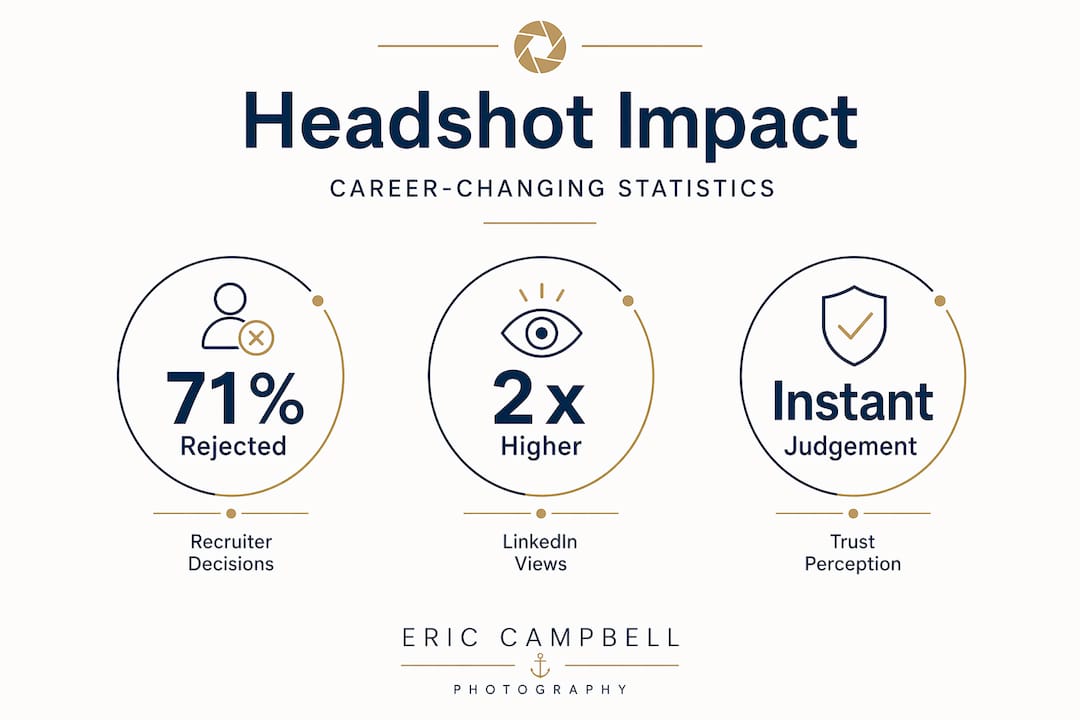
Recruiters are making real decisions based on what they see. A striking statistic: 71% of recruiters have rejected candidates based solely on their LinkedIn profile picture. Not their experience. Not their credentials. Their photo. That reality should reframe how you think about what a headshot costs versus what it earns.
The impact of headshots on career advancement goes beyond LinkedIn. When clients search for a financial advisor, attorney, or consultant, the photo on a website bio page often determines whether they make contact at all. A polished, approachable image communicates that you take your work seriously. A blurry, outdated, or casual photo sends the opposite message, whether you intend it to or not.
Here is what a strong professional headshot signals to the people evaluating you:
- Credibility: You understand the professional environment and present yourself accordingly.
- Attention to detail: If you invest care in how you present yourself, the assumption is you bring that same care to your work.
- Approachability: Authentic expressions paired with professional framing make you someone people want to work with.
- Consistency: A polished image across platforms tells the same story about you wherever someone finds you.
The headshot value for networking cannot be separated from these perceptions. You are not just sharing a photo. You are making a case for why someone should click, connect, or reach out.
What makes a good professional headshot
Knowing the benefits of headshots is one thing. Knowing what separates a strong photo from a weak one is where most professionals lose ground. A good professional headshot is not just a sharp photo. It is a photo where every element is working toward the same goal: making you look like the best, most credible version of yourself.
The core components that matter most are:
- Lighting: Even, flattering light eliminates harsh shadows and creates a clean, professional look. Poor lighting is the fastest way to make a good-looking person appear unprepared.
- Background: A clean, uncluttered background keeps the focus on your face. A clean background headshot removes distractions and works across the widest range of professional uses.
- Attire: Dress for the role you want, not just the one you have. Your clothing should reflect your industry while projecting confidence.
- Expression: Authentic expressions and appropriate attire convey both competence and approachability. Forced smiles read as forced. A relaxed, natural expression is what builds trust.
The mistakes people make are just as instructive. Using a cropped group photo, a vacation selfie, or an image from five years ago creates real problems. An outdated headshot causes cognitive dissonance when someone meets you on a video call or in person and finds you look noticeably different. That disconnect erodes trust before the conversation even starts.
Pro Tip: Update your headshot any time your appearance changes significantly, you shift industries, step into a leadership role, or your current photo is more than two to three years old. Think of it the same way you would a resume update.
Headshot quality and perception are directly connected. A photo taken on a smartphone in poor lighting does not just look unprofessional. It signals that professional presentation was not a priority, and that message travels further than you might think.
How headshot needs vary by industry
Not every professional needs the same style of headshot, and understanding your industry’s visual expectations will help you get the most out of your session. The right look for a personal injury attorney is not the right look for a UX designer, and both are different from what a keynote speaker needs on a conference website.
Here is how headshot expectations differ across common professional fields:
| Industry | Tone and style | Key visual priorities |
|---|---|---|
| Legal and finance | Formal, authoritative | Dark or neutral attire, structured background, direct expression |
| Technology and startups | Approachable, modern | Slightly relaxed attire, natural lighting, warmer expression |
| Healthcare | Trustworthy, calm | Clean whites or professional scrubs, soft neutral background |
| Creative and marketing | Expressive, on-brand | Color-forward or environmental backgrounds, personality-forward framing |
| Speakers and media | Commanding, personable | High contrast, strong eye contact, designed for large-format use |
The rise of remote and hybrid work has amplified the professional photography significance in every category. Your headshot is often the only consistent visual cue about your professionalism in a digital-first environment. When your colleagues, clients, and collaborators work across different cities and time zones, your photo becomes your standing presence in Slack channels, email threads, and video call waiting rooms.
Beyond LinkedIn, headshots appear in speaker bios for conferences, bylines for published articles, press releases, award announcements, and company websites. Professional photography removes technical barriers like low resolution or improper cropping, which makes your image usable across all of these contexts without modification. A casual phone photo rarely meets those requirements and often fails at the worst possible moment, like when a publication needs your headshot on short notice. Personal branding photography that covers multiple looks and environments gives you a library of images ready for any opportunity.
Traditional studio vs. AI-generated headshots
The question of whether you need a professional headshot now comes with a newer wrinkle: AI headshot generators. These tools promise polished portraits at a fraction of the cost, and they have become popular enough to be worth understanding clearly.
Here is a direct comparison of what each approach delivers:
| Factor | Traditional studio photography | AI headshot generator |
|---|---|---|
| Cost | Higher upfront investment | Up to 90% lower cost than studio sessions |
| Turnaround | Same-day to a few days | Minutes to hours |
| Image quality | High-resolution, fully customizable | Good for profile use, less versatile |
| Authenticity | Natural expression, real coaching | Generated from uploaded photos, can look artificial |
| Privacy | No data concerns | Photo data uploaded to third-party platforms |
| Multi-use versatility | Speaker bios, press, print, publications | Best suited for profile photos only |
AI tools have real advantages for teams that need quick consistency across dozens of employee profiles. AI headshot platforms can deliver brand-consistent portraits rapidly and reduce costs significantly, which makes them useful in specific contexts.
The limitations become clear at scale. AI-generated images can struggle with accurate reproduction of skin tones, eyewear, and distinctive features. They cannot coach your expression, read your energy, or make real-time adjustments. When your headshot needs to work across a website, a publication, and a conference program, the resolution and flexibility of a studio session pays for itself.
Pro Tip: If budget is a genuine constraint, an AI headshot is better than a bad photo or no photo. But if this image represents you in competitive environments like job searches, client acquisition, or media appearances, a professional session is worth the investment.
Why invest in headshots from a professional photographer comes down to one thing: professional photography effectively removes every technical objection that would prevent your image from being used wherever it needs to go.
My take on the real value of a great headshot
I have seen it happen more times than I can count. Someone books a session skeptical about whether it will actually make a difference, and then they update their LinkedIn profile. Within weeks, they are getting messages from recruiters they never knew were watching, or a client reaches out because they finally felt comfortable enough to connect.
Headshots act as digital handshakes that accelerate the career milestones most people wait too long for. That acceleration is not magic. It is the result of removing friction. When your photo conveys warmth, competence, and credibility at a glance, people do not have to work as hard to trust you. They just do.
The misconception I encounter most often is that investing in a headshot feels like a luxury expense. People will spend thousands on certifications, conferences, and business cards without hesitation, and then balk at a photography session that will represent them on every platform they use for the next two to three years. Professional headshots build long-term marketing assets that last across platforms. When you calculate the cost per impression over that period, it is one of the most efficient professional investments available.
My honest advice: do not treat your headshot as an afterthought you will get to eventually. The opportunities that quietly pass you by because your photo did not inspire confidence are ones you will never know you missed.
— Mike
Get a headshot that actually opens doors
If you are ready to put a stronger image to work for your career, Eric Campbell Photography offers professional headshots in Fort Lauderdale and throughout South Florida, from Hollywood and Aventura to Coral Gables and Boca Raton. Every session is guided, comfortable, and designed to produce images that look like you on your best day.
For professionals who need more than a single portrait, branding photography services deliver a full library of images built for websites, social platforms, press, and speaker materials. Mobile sessions are available for corporate teams, and same-day gallery delivery means you are never waiting long to see results. Hundreds of five-star reviews speak to the experience: comfortable sessions, natural results, and fast turnaround. Book your session at ericcampbellphotography.com or call 954.766.1954.
FAQ
Why does a professional headshot matter so much?
People form impressions of trustworthiness and competence within 100 milliseconds of viewing a face. A professional headshot gives you control over that first impression in every digital context where you are evaluated.
How often should you update your professional headshot?
Most professionals should update their headshot every two to three years or sooner after a significant change in appearance, job title, or industry. An outdated photo creates a disconnect that undermines credibility before a conversation begins.
Does a professional headshot really impact job searching?
Yes. Research shows that 71% of recruiters have rejected candidates based solely on their LinkedIn profile picture. A polished, current headshot removes a common reason for disqualification before your qualifications are ever reviewed.
Is AI-generated headshot good enough for professionals?
AI-generated headshots work well for basic profile photos and team consistency at low cost. However, they lack the resolution, expression authenticity, and multi-platform versatility that a studio session provides, which matters most in competitive career environments.
What platforms benefit from a professional headshot?
LinkedIn, company websites, speaker bios, press releases, email signatures, and social media profiles all benefit from a strong headshot. Using a consistent image across platforms reinforces your personal brand and builds recognition over time.