

TL;DR:
- Actor headshots focus on conveying emotional range and castability for casting directors, whereas corporate headshots emphasize professionalism and approachability for business audiences. Technical choices like lighting, framing, wardrobe, and retouching are tailored to each purpose, making cross-use ineffective. Investing in separate sessions ensures photos perfectly serve their specific audience and maximize professional impact.
Actor headshots and corporate headshots are built on entirely different visual languages, and understanding why actor headshots differ from corporate portraits can determine whether you get called in for a role or passed over in seconds. The goal of an actor headshot is to communicate castability and emotional range. The goal of a corporate headshot is to project competence and approachability. These are not the same thing, and treating them as interchangeable is one of the most common mistakes creative professionals make when managing their professional image.
Why actor headshots differ from corporate: the purpose gap
The single biggest reason these two headshot types look so different is that they answer completely different questions for the person viewing them. Casting directors evaluate actor headshots in under three seconds, looking for a clear, castable type that signals specific roles. That speed means your photo has to communicate who you are as a performer before a single word of your resume is read.
Corporate viewers ask a different question entirely: “Is this person credible, approachable, and someone I want to work with?” A LinkedIn profile photo or a company website portrait needs to project stability and trust. The importance of headshot in acting is rooted in type clarity, not polish. The importance of a corporate headshot is rooted in professionalism, not personality range.
This divergence in purpose drives every downstream decision: the expression you wear, the mood the lighting creates, the wardrobe you choose, and how much retouching is applied. Casting-oriented photography prioritizes communicating a clear type over mere attractiveness, which is why an actor headshot of the same person can look strikingly different from their corporate portrait.
Pro Tip: Before your session, write down the single role or job title you most want to be seen as. That answer should drive every creative decision in your headshot, from expression to wardrobe to backdrop color.
- Actor headshots signal: “Here is the type of character I can play.”
- Corporate headshots signal: “Here is the professional you can trust.”
- Casting directors want emotional specificity, not generic smiles.
- Corporate viewers want consistency, warmth, and a sense of reliability.
- Both require professional photography, but the definition of “professional” looks completely different in each context.
How composition, lighting, and framing separate the two
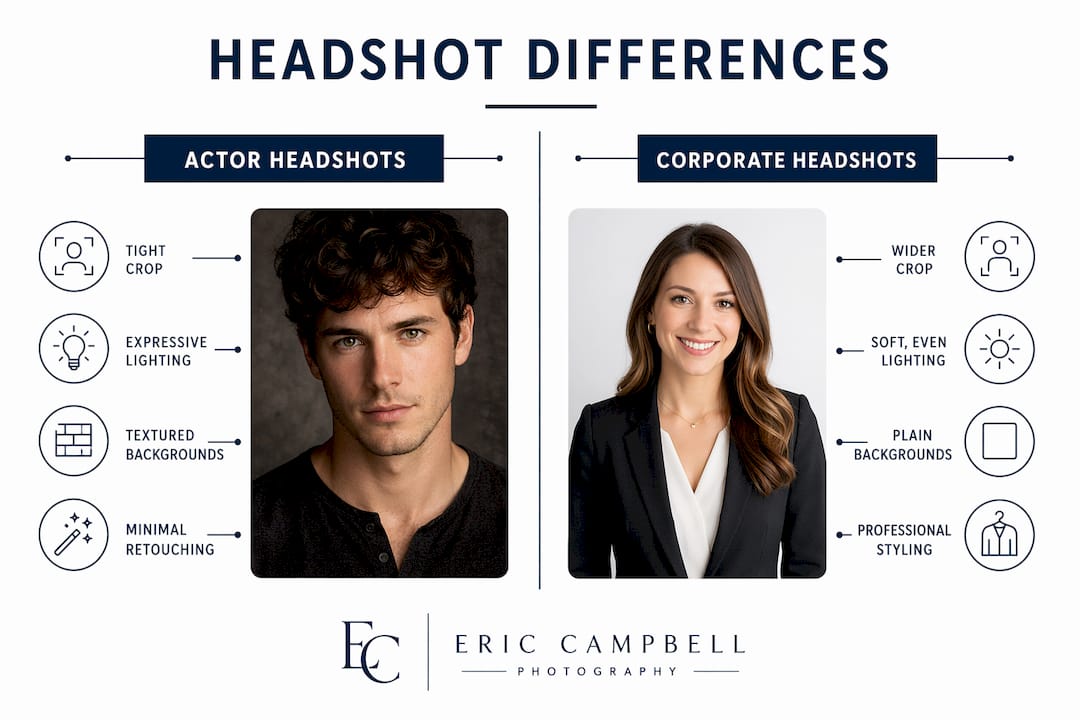
The technical differences between an actor portrait and a corporate photo are not subtle. Actor headshots use tighter crops to remain legible in casting platform thumbnails, where a face that fills the frame reads clearly at small sizes. Corporate headshots use wider framing to include wardrobe context, which signals industry and role before the viewer reads a single word.
Lighting tells an equally distinct story. Directional lighting patterns like Rembrandt and short lighting are common in theatrical headshots because they add dimension and shadow, creating emotional depth that reads as range and complexity. Corporate portraits rely on clamshell or broad lighting setups that eliminate harsh shadows and produce an even, polished look. That flat lighting reads as approachable and consistent, which is exactly what a business audience expects.
Backdrops follow the same logic. Actors often shoot against textured, mid-tone, or slightly moodier backgrounds that add visual interest without distracting from the face. Corporate backgrounds tend toward clean, neutral tones, often gray or white, that keep the focus on professionalism. Platform constraints guide corporate headshot decisions in a direct way: LinkedIn’s circular crop demands specific face and eye placement to maintain visibility, while casting platforms prioritize legibility at thumbnail sizes.
| Feature | Actor headshot | Corporate headshot |
|---|---|---|
| Crop | Tight, face-forward | Wider, includes wardrobe |
| Lighting | Directional, shadowed | Broad, even, flat |
| Background | Textured, mid-tone | Clean, neutral |
| Expression | Emotionally specific | Warm, approachable |
| Platform fit | Casting thumbnails | LinkedIn circular crop |
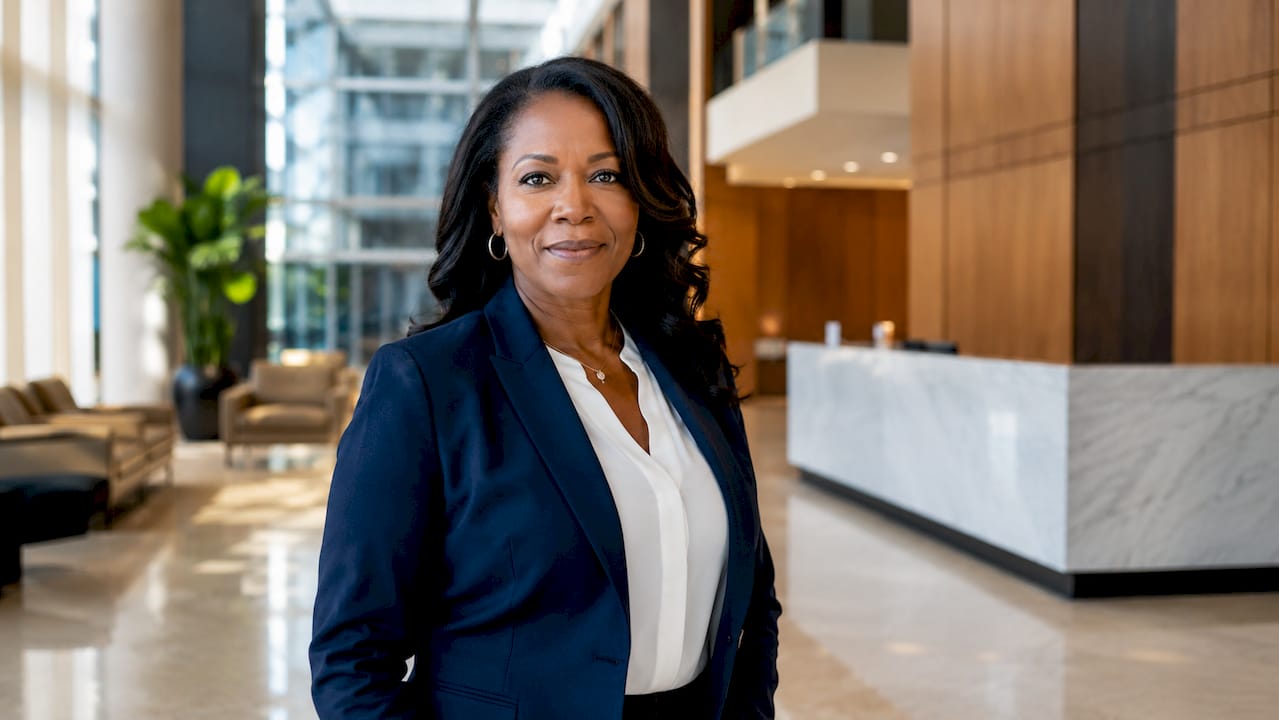
Corporate headshots optimize face placement for circular crops, aiming for roughly 60% face coverage with eyes in the upper third of the frame. That specific composition keeps the subject looking professional and visible regardless of how the platform displays the image. Actors, by contrast, need to deliver multiple crop variants to ensure their headshots look optimized across square, vertical, and thumbnail display formats used by different casting services.
Pro Tip: If you are an actor, ask your photographer to shoot a few frames with slightly more headroom than usual. That extra space gives you flexibility when submitting to platforms that display photos differently.
Wardrobe, retouching, and styling: different messages, different choices
Wardrobe is where the visual language of each headshot type becomes most obvious. Actor wardrobe is simple, fitted, and neutral to avoid distracting from the face or locking the actor into a single character type. A bold pattern or a recognizable uniform tells the casting director what role you are playing before they have a chance to imagine you in anything else. Solid colors, clean necklines, and fitted cuts keep the focus exactly where it belongs: on your face and your expression.
Corporate wardrobe works in the opposite direction. A well-chosen blazer, a crisp collar, or industry-specific attire signals role and status before a word is read. A financial advisor and a creative director will dress differently for their headshots, and that difference is intentional. Guidance on dressing for a corporate headshot consistently points toward industry-aligned clothing that reinforces the professional identity the viewer expects to see.
Retouching standards also split along clear lines:
- Actor headshots: Retouching is minimal by design. Casting platforms like Central Casting require current, natural-looking photos without heavy editing. Over-retouching can disqualify an actor if the photo no longer matches their real appearance on set.
- Corporate headshots: Corporate retouching focuses on skin tone consistency and color accuracy, allowing more polish while keeping the subject recognizable. The goal is a refined version of you, not a different person.
- Makeup and grooming: Actors often work with minimal makeup to preserve authenticity. Corporate subjects may use slightly more product to ensure consistency across a team gallery or branding suite.
- Color grading: Corporate photos often receive warmer, more consistent color treatment to align with a company’s brand palette. Actor headshots stay truer to natural skin tones and ambient color.
The underlying principle is the same in both cases: the photo should look like you on your best day. The difference is in what “best day” means for each professional context.
Why one headshot rarely works for both purposes
The temptation to use a single photo for both acting submissions and professional networking is understandable. Sessions take time, editing costs money, and a great photo feels like a great photo. But trying to use the same image for both actor and corporate purposes reduces the effectiveness of both. Actor headshots that look corporate lose the emotional range casting directors need. Corporate photos with actor-style expressiveness lose the steady professionalism business audiences expect.
Here is how the cross-use problem plays out in practice:
- Expression mismatch. An actor headshot often carries a specific emotional charge, a hint of intensity, vulnerability, or humor. That same expression on a LinkedIn profile can read as unprofessional or off-putting to a hiring manager or client.
- Lighting tells the wrong story. Directional, shadowed lighting that adds dimension for a casting director can make a corporate subject look harsh or unapproachable on a company website.
- Framing creates confusion. A tight, face-forward crop that works perfectly on a casting platform can look oddly cropped or overly intense on a professional networking site designed for wider, wardrobe-inclusive portraits.
- Wardrobe sends mixed signals. A neutral, fitted top that keeps casting options open looks underdressed for a corporate profile where industry attire signals credibility and role.
- Platform display breaks the composition. A photo composed for casting thumbnail display will often fail LinkedIn’s circular crop requirements, cutting off the face or placing the eyes in the wrong position.
The practical solution is to treat these as two separate professional tools. If you work in both worlds, as many performers and creative professionals in South Florida do, investing in distinct sessions for each context is not an extravagance. It is the difference between a photo that works and one that quietly undermines you every time someone clicks your profile.
Key takeaways
Actor and corporate headshots serve fundamentally different professional purposes, and every technical and stylistic choice flows directly from that difference.
| Point | Details |
|---|---|
| Purpose drives everything | Actor headshots communicate castable type; corporate headshots project competence and trust. |
| Lighting signals intent | Directional lighting adds emotional depth for actors; flat lighting signals approachability for corporate use. |
| Retouching standards differ | Actor photos stay minimally edited to match real appearance; corporate photos allow more polish for brand consistency. |
| Wardrobe sends a message | Neutral, fitted clothing keeps actor options open; industry-specific attire signals role in corporate portraits. |
| One photo rarely serves both | Cross-using headshots weakens both images by sending conflicting visual signals to different audiences. |
What I have learned from shooting both sides of this
After years of working with actors, executives, and everyone in between at Eric Campbell Photography, the most consistent mistake I see is people arriving at a session without a clear sense of who the photo is for. They want a “good headshot,” which is a reasonable goal. But a good actor headshot and a good corporate headshot are good in completely different ways, and conflating the two almost always produces something that is mediocre at both.
The actors who get the most out of their sessions are the ones who come in knowing their type. Not their dream role. Their type. The roles they actually get called in for, the characters that match their energy and physicality. That clarity makes every decision in the session faster and more focused. The corporate professionals who get the most out of their sessions are the ones who know their audience, whether that is a potential client, a hiring committee, or a conference organizer scanning a speaker bio page.
My honest advice: if you are working in both the creative and professional worlds, budget for two separate sessions. The benefits of professional headshots multiply when the photo is built for a specific audience rather than trying to speak to everyone at once. A photo that tries to do everything usually does nothing particularly well.
— Mike
Get headshots built for your specific audience
At Eric Campbell Photography in Fort Lauderdale, every session is designed around a clear outcome. Actor headshot sessions focus on character direction, wardrobe planning, and capturing the kind of natural range that gets you in the room with casting directors and agents. Corporate and LinkedIn headshot sessions are built for professionalism and platform performance, with lighting and composition optimized for the way business audiences actually view your image. Whether you need one type or both, book your session at Eric Campbell Photography and walk away with photos that do exactly what they are supposed to do.
FAQ
What is the main difference between actor and corporate headshots?
Actor headshots communicate castable type and emotional range for casting directors, while corporate headshots project professionalism and approachability for business audiences. Every technical choice, from lighting to expression to wardrobe, flows from that core difference in purpose.
Can I use my actor headshot for LinkedIn?
Using an actor headshot on LinkedIn is generally not effective. Actor-style lighting, tight framing, and emotionally specific expressions can read as unprofessional or intense to corporate viewers who expect a warmer, more polished presentation.
How much retouching is appropriate for an actor headshot?
Minimal retouching is the standard for actor headshots. Casting services like Central Casting require current, natural-looking photos, and heavy editing can disqualify an actor if the photo no longer matches their real appearance.
What lighting works best for actor headshots?
Directional lighting patterns like Rembrandt or short lighting are common in actor headshots because they create dimension and emotional depth. This contrasts with the broad, even lighting used in corporate portraits to produce a polished, approachable look.
Do I need separate headshots for acting and corporate use?
Yes. The visual requirements for casting submissions and professional networking platforms are different enough that a single photo rarely serves both well. Separate sessions allow each image to be fully optimized for its intended audience and platform.